

Table of Contents[Hide][Show]
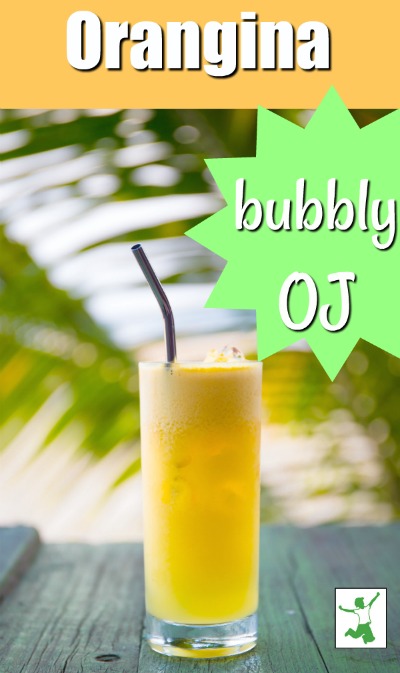
How to ferment orange juice into orangina, a bubbly, probiotic beverage that is both delicious and healthy for the gut. A great alternative to orange soda!
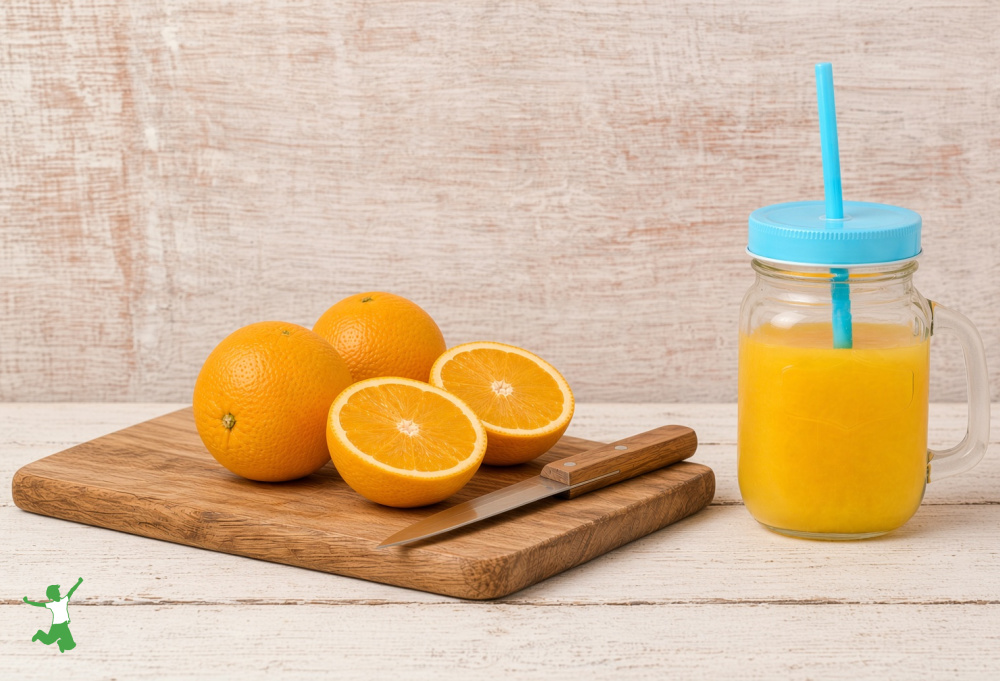
The most commonly grown fruit tree in the world is the orange. This familiar fruit is a hybrid of ancient cultivated origin, possibly the pomelo and mandarin.
The many varieties of orange are widely grown in warm climes. Brazil and the United States are the primary producing countries. Within the United States, California and Florida predominate.
The elementary school I attended in West Central Florida happened to be located only a few miles from a Hood’s orange juice factory. This facility is now owned by Coca-Cola.
Many days, my classmates and I could smell the distinctive aroma of burning citrus peels from the belching smokestack.
While this unusual smell didn’t bother me too much, many of my classmates found it nauseating.
Some even stayed indoors for recess on days when the wind was blowing in the school’s direction.
Commercial Orange Juice Processing
While burning citrus peel waste may not seem too problematic, the process of extracting the juice from the oranges in a factory setting definitely is.
Conventional oranges are sprayed heavily with a class of pesticides called cholinesterase inhibitors.
This class of chemicals is known to be highly toxic to the nervous system. A single orange juice factory is able to squeeze up to 1,800 tons of oranges each day. This is accomplished by placing the entire orange into the pressing machines – pesticides and all!
As if that isn’t enough, juice manufacturers use acid sprays during processing. These chemicals extract every drop of juice from each orange. This includes orange oil from the skin.
Every glass of “healthy” supermarket OJ contains traces of these toxic residues. Shockingly, these toxins are not listed on the label. (1)
While orange juice can and should be a wonderfully healthy beverage, processed orange juice from the supermarket is clearly to be avoided!
How to best make orange juice a healthy choice? Surely, freshly squeezed from unsprayed oranges is the best choice. If you’re game, you can take it one step further adding probiotics to the mix.
Cultured OJ
It is easy to ferment orange juice into the delicious, bubbly beverage commonly referred to as “orangina”.
The culturing process adds a healthy dose of probiotics along with enhanced nutrition and enzymes.
A dozen medium-sized oranges are all you need to get started with homemade orangina. Unsprayed or organically grown is best.
If you can’t easily obtain a bag of oranges, many health food stores sell unpasteurized orange juice in the refrigerated section.
While purchasing fresh juice is a good alternative, squeezing your own is the most economical way to make this popular fermented beverage.
Note that the recipe below contains a secondary fermentation that is optional, but worth the effort! All you have to do is bottle the initial orangina ferment (I use 8 ounce flip-top glass bottles). The result is highly carbonated beverage that is a healthy alternative to orange soda from the store.
This linked recipe contains more details on how to bottle homemade fermented beverages.
If you don’t have time to ferment OJ, then at least add cream to fresh-squeezed OJ to lower the blood sugar spike!
Recipe adapted from Nourishing Traditions Cookbook
Orangina Recipe
Easy recipe for fermenting fresh squeezed orange juice into bubbly orangina. A great alternative to orange soda!
Ingredients
- 12 large oranges preferably organic
- 1-2 tsp orange extract optional, preferably organic
- 3 cups filtered water
Fermentation Starter
- 1/4 tsp sea salt Use with whey as the fermentation starter. Do not use with dairy-free fruit and vegetable starter.
- 1/4 cup liquid whey Use in combination with sea salt as the fermentation starter. Do not use with dairy-free fruit and vegetable starter.
- fruit and vegetable starter Use instead of whey and sea salt as a dairy-free fermentation starter.
Instructions
-
Squeeze the oranges to produce about 1 quart of unfiltered juice. Add water and mix well in a half-gallon mason jar, taking care to leave a minimum of an inch at the top.
-
Stir in the sea salt and orange extract. Screw on the lid and leave on the kitchen counter for two days. Refrigerate.
-
After chilling, enjoy this lightly effervescent, probiotic beverage!
-
For additional carbonation, I recommend a secondary ferment by bottling the cultured OJ to transform it into carbonated orangina.
-
The orangina will last a month or two in the refrigerator and will develop an appealing orange/banana-like flavor after a few days.
-
Always open bottles of orangina when very cold. Never shake the bottles, or you will make a mess when they are opened!
Recipe Video
References
(1) Dirty Secrets of the Food Processing Industry
(2) Nourishing Traditions Cookbook
More Fermented Drink Recipes to Enjoy!
Switchel: Nature’s Healthy Gatorade
How to Make Traditional Root Beer
How to Make Fermented Lemonade (Hindu Lemonade)
How to Make Ginger Ale



This Easy Orangina recipe sounds amazing! I love how it’s a healthy twist on a classic. Can’t wait to try fermenting my own orange juice—thanks for sharing the video guide too!
This Easy Orangina recipe sounds amazing! I love how it’s a healthy twist on a classic. Can’t wait to try fermenting my own orange juice—thanks for sharing the video guide too!
Can I use another citrus fruit? I want to use pomelos. Do you think it will work?
Does the amount of pulp effect anything?
(I haven’t tried this recipe yet.) Your instructions don’t seem to indicate when to add the fermentation starter, though I assume it would be added along with the salt and orange extract in step #2.
Yes, that’s what I meant! Thanks for that. I will clarify the language better.
I find it hard to read (much less believe) an article which starts with such a falsehood as “The most commonly grown fruit tree in the world is the orange.” I literally LOL’d when I read that. Common sense will tell you that bananas and apples are far more abundant. But to verify, I did a quick Google search to be sure. ANY competent editor should have done the same. The results show that bananas are number 1 (by a large margin), followed by apples and then oranges.
That’s interesting. According to Wiki, “As of 1987, orange trees were found to be the most cultivated fruit tree in the world”.
Perhaps your sources are looking at production rather than number of trees?
What about using your ginger soda starter instead of whey? What step do you add the whey?
The whey is added at the beginning of the fermentation with all the other ingredients. I haven’t tried using the ginger bug as a starter. It might work fine. Let us know what happens if you try it!